Bedding and sleep surfaces
Latex Toppers Explained: Feel, Support and Care
A topper cannot turn every old mattress into a new one. But when the bed beneath is still sound and simply feels too firm, too unyielding, or a little short on comfort, a layer of latex can change the encounter. The result is responsive rather than sluggish: cushioning that gives way under pressure, then seems ready to return.
Published 20 October 2026
The small renovation above the mattress
A mattress is often treated as a decision with a long horizon: choose carefully, live with it for years, and try not to think about the invoice. A topper offers a less monumental possibility. It is a separate layer placed over the mattress to alter the feel at the surface. It may add cushioning, soften a firm bed, or provide a little more contour around the shoulders and hips. It does not replace the structure beneath it, and that distinction is the first useful thing to know.
Latex is one of several materials used for this purpose. It is made from rubber, which may be natural, synthetic, or a blend; the word alone does not tell you the precise source or composition. In a topper, latex is generally a resilient foam-like layer. Press a hand into it and it yields. Lift the hand and the surface recovers promptly. That simple response shapes much of the experience: latex cushions, but it does not usually let the body sink slowly into a deep impression in the way some memory foam does.
The difference is not merely technical. It is felt in the small movements of the night: turning over, drawing a knee up, getting out of bed. A latex topper tends to move with the sleeper rather than holding an impression for a while. For some people that quality feels buoyant and easy. For others, particularly those who prefer a close, enveloping cradle, it may feel too springy. The best description is not “better” or “worse,” but a particular kind of comfort that either suits the sleeper or does not.
What latex feels like
People often use the word “support” to describe any surface that feels substantial. In practice, a topper primarily changes the comfort layer—the part of the sleep surface that meets the body. The mattress underneath continues to do most of the work of supporting the body as a whole. Latex can add a springy cushion between the sleeper and the mattress, helping to soften the first contact without necessarily making the bed feel as if it has lost all structure.
That is why latex may appeal to someone who finds a mattress uncomfortably firm but does not want a slow-moving, deeply conforming surface. The material can respond locally to pressure while keeping a more lively feel. A shoulder may settle into the surface; when the sleeper turns, the latex is ready to respond again. This can make repositioning feel less effortful than on materials that retain a pronounced body impression.
There is no single latex sensation. Formulation, manufacturing method, density, firmness, thickness, cover fabric, and the mattress below all influence the result. Dunlop and Talalay are two common processes used to make latex. They describe different manufacturing approaches, not a simple ranking from good to bad. A person comparing them may notice differences in feel, but the name of the process cannot substitute for details about the actual layer and, where possible, trying it in person.
Likewise, labels such as “soft” or “medium” are not universal measurements. Firmness is experienced through a combination of body size, sleeping position, pressure points, mattress construction, and personal preference. A soft topper on one mattress may feel quite different from the same topper on another. The bed is a system; changing one layer changes the whole impression, but does not erase what is underneath.
Thickness: a matter of degree
Thickness is one of the most visible specifications on a topper, and one of the easiest to overinterpret. A thicker layer usually has more material between the body and the mattress, which can create a more noticeable change in surface feel. But thickness alone does not tell you how soft the topper will feel, how supportive it will seem, or whether it will suit a particular sleeper. Firmness and construction matter too.
A thinner topper may make a relatively modest adjustment, useful when the existing bed is close to comfortable but needs a little more cushioning. A thicker one can produce a more substantial change, especially when the surface is distinctly firm. Yet more material is not automatically more comfort. If the underlying mattress is already sagging, a thicker topper may simply follow its unevenness, leaving the sleeper to feel the same underlying problem with an additional layer on top.
It is worth considering the practical effects as well. A topper adds height to the bed, which may affect fitted-sheet depth, the way the mattress protector fits, and the ease of getting in and out. It can also make a mattress feel different near the edges. Before choosing, measure the mattress and check the height and dimensions of the topper, along with the fit of the bedding already in use.
A useful question is not “How thick should a topper be?” but “How much change am I trying to make?” If the goal is a small adjustment, a very substantial layer may overshoot it. If the mattress surface is much too firm but structurally sound, a more generous layer may be worth considering. There is no formula that can make a personal comfort preference impersonal; specifications narrow the options, but experience completes the decision.
Firmness and the mattress beneath
Before buying any latex mattress topper, spend a little time assessing the bed it will sit on. Lie in your usual sleeping position, and consider whether discomfort comes from the surface feeling too hard, from a particular pressure point, or from a lack of support that appears across the whole mattress. Those are not necessarily the same problem.
A topper may help if a mattress is broadly even, stable and comfortable enough in its basic support, but its surface feels too firm. It may also be useful when the mattress is in good condition and the sleeper wants a different feel without replacing the whole bed. It is less likely to help when the mattress has a permanent dip, a damaged edge, broken components, or a pronounced slope. A new layer cannot restore a worn-out support structure. In some cases it may make the unevenness less obvious at first, but the underlying fault remains.
It can help to inspect the mattress from several angles. Look for visible sagging and check whether the bed sits on an appropriate base. Make sure the mattress has been positioned and cared for according to its manufacturer’s instructions. If it is relatively new, review the warranty and any guidance on rotation or support before making changes. The problem that seems to belong to the mattress may, occasionally, involve the base, frame, or bedding instead.
Sleeping position can inform the choice, though it cannot dictate it. Side sleepers may look for enough cushioning at the shoulder and hip; back sleepers may prefer a surface that cushions without feeling overly yielding; stomach sleepers may be especially attentive to whether added softness changes the way the body rests. These are starting points, not rules. A person’s shape, weight, habits and preferences all matter, as does the mattress itself.
Movement, warmth and compatibility
Latex’s quick response can make changing position feel straightforward. Unlike a slow-recovering surface that may retain a body impression for a moment, latex tends to rebound as pressure shifts. That characteristic is often described as buoyancy. It can feel pleasantly easy-going, though people who prefer a still, close-fitting sensation may find the response more noticeable than they would like.
For couples, movement is worth considering but difficult to reduce to a promise. A topper can influence how movement feels at the surface, yet motion transfer depends on the entire bed: the mattress, its construction, the base, the size of the sleepers and the character of their movements. A resilient material may respond promptly under one person, but it does not follow that every movement will be invisible to the person beside them.
Airflow is another common consideration. Latex is often described as breathable, but the temperature a sleeper experiences depends on more than the core material. Room temperature, bedding, sleepwear, humidity, mattress construction and individual heat sensitivity all play a part. A cotton cover, wool layer or other bedding component can influence the feel around the body. It is sensible to treat claims about a cooler night as possibilities shaped by the whole sleep environment rather than guarantees delivered by one ingredient.
Compatibility is usually simple, but worth checking. Confirm that the topper’s size matches the mattress and that its cover, if supplied, is removable or washable only if the manufacturer says so. Consider whether the mattress protector will fit over the combined height. If the mattress is on an adjustable base, check the topper maker’s guidance: flexibility and secure placement matter when a bed changes position. A topper that shifts, bunches or has unsuitable dimensions can be an irritation regardless of the quality of the latex.
Natural does not mean self-explanatory
Some latex toppers are made with natural rubber, some with synthetic latex, and some with blends. Product language can be imprecise, so check the material description rather than relying on a broad label. If a particular certification, sourcing standard or manufacturing detail matters to you, look for documentation that identifies what it covers. A claim about one component does not necessarily describe every part of a finished product, including its cover, adhesives or other materials.
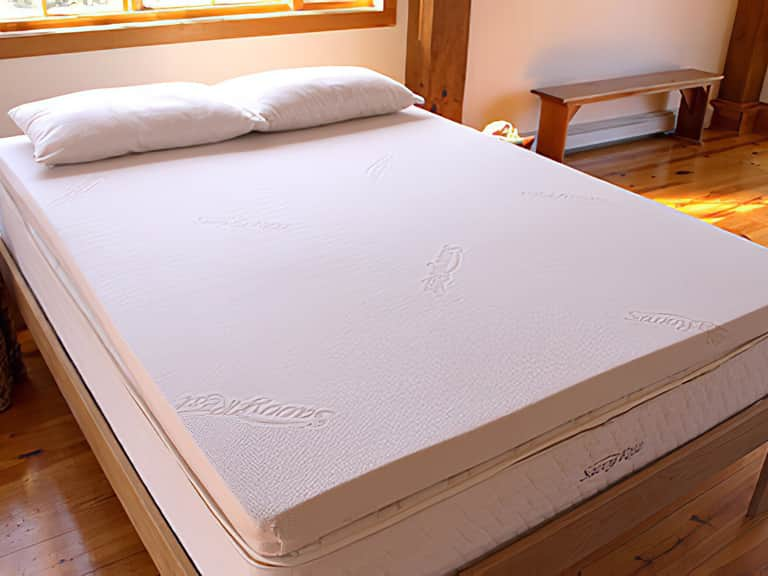
For instance, the Savvy Rest Vitality Latex Mattress Topper is described as a three-inch layer of soft natural Talalay latex in a certified organic cotton stretch-knit casing. Its listed construction makes it a relevant example of a topper intended to add cushioning, rather than a product that replaces the mattress beneath. As with any particular model, the useful questions are concrete: Is the stated firmness likely to suit the sleeper? Does the thickness match the amount of change wanted? Are the dimensions, care directions and warranty appropriate?
Natural materials are not automatically the right choice for everyone, and they do not remove the need to check product details. People with latex allergies or sensitivities should seek appropriate medical advice and verify the manufacturer’s information before buying. A cover may separate skin from the latex, but it should not be assumed to resolve an allergy or sensitivity. Product specifications and personal health considerations belong in the same decision.
Care: less mystery, more attention
Latex toppers are not generally treated like ordinary sheets or a washable mattress pad. Care instructions vary, so the manufacturer’s directions should take precedence over habits borrowed from other bedding. Many latex layers should not be machine washed or soaked; excess moisture and rough handling can damage materials or make them difficult to dry properly. A removable cover, if included, may have its own washing instructions, distinct from those for the latex core.
A practical routine begins with protection. Use a suitable mattress protector if recommended and keep the topper beneath fitted bedding that fits securely. This helps limit exposure to perspiration, dust and accidental spills. If the topper needs attention, consult its care label or instructions before using detergent, stain treatment, heat or a vacuum attachment. When in doubt, gentle spot cleaning with the method approved by the maker is safer than improvising.
Air the bed when convenient and allow damp bedding to dry before making it up. If the topper needs to be moved, support it rather than dragging it across a rough floor or bending it sharply for a long period. Follow any guidance on rotation; not every model is designed to be flipped. A topper’s lifespan depends on its materials, use, care and the condition of the bed below, so fixed longevity claims should be treated cautiously.
Regularly check for changes in the surface. A topper that has developed persistent unevenness, no longer lies securely, or has been damaged may not be doing its job. If it is still under warranty, consult the terms before disposing of it. Warranties may distinguish between manufacturing defects and changes associated with use, and the details matter more than the reassuring presence of a warranty badge.
A decision without theatre
Buying a topper can be made to sound like a minor act of engineering, complete with charts, adjectives and confident declarations about ideal firmness. In reality, the decision is often quieter. A sleeper wakes with a sore shoulder, or finds a bed harder than remembered, and begins to wonder whether a small change might help. The useful response is neither to dismiss that discomfort nor to assume that a particular material will solve it.
Start with the mattress. If its support is failing, consider whether repair or replacement is the more sensible answer. If it remains sound and the issue is surface firmness, a topper may be a reasonable experiment. Then compare thickness, firmness, construction, dimensions, compatibility and care requirements. Where possible, try the material in person or check the returns policy before committing. Comfort is intimate enough that a product description can only take you part of the way.
Finally, give the change time, but not unlimited time. A new surface can feel unfamiliar at first; that does not automatically mean it is wrong. Yet persistent pain or a worsening sleep experience deserves attention beyond another layer of bedding. A topper is a comfort accessory, not a medical treatment and not a substitute for suitable support.
Latex earns its appeal through a particular balance: cushion with a quick return, softness without quite the same sinking sensation as slower-response foams. For the right sleeper and the right mattress, that can be a meaningful adjustment. For the wrong combination, it is simply another layer. The distinction begins beneath the sheets, with an honest look at what the bed needs—and what it cannot be asked to do.
Quick checklist before choosing
- Check the mattress first: a topper may change surface comfort, but cannot correct sagging or failed support.
- Identify the problem: decide whether the bed is too firm, uneven, too warm, or simply different from what you prefer.
- Compare firmness and thickness: neither specification tells the full story on its own.
- Read the material details: confirm whether the latex is natural, synthetic or blended, and check any relevant certification claims.
- Measure the bed: account for mattress dimensions, added height, protector and fitted-sheet depth.
- Review care and warranty terms: do not assume the latex core can be washed or flipped.
- Consider health and preference: check allergy concerns with appropriate professional advice and choose a feel that suits your own experience.
Frequently asked questions
Can a latex topper make a mattress more supportive?
A topper can change cushioning and the way the surface responds, but the mattress beneath remains the main support structure. If that structure is worn or uneven, a topper is unlikely to fix the problem.
Does a thicker latex topper always feel softer?
No. Thickness affects how much material sits between the sleeper and the mattress, but firmness, latex formulation, cover and the underlying bed also shape the feel. A thicker topper is not automatically a softer one.
Is latex cooler than memory foam?
Some sleepers find latex more open or responsive, but temperature depends on the complete bed and bedroom environment. Material descriptions alone cannot guarantee that an individual will sleep cooler.
How should a latex topper be cleaned?
Follow the maker’s care instructions. The latex core may not be suitable for machine washing or soaking, even when a removable cover can be laundered separately. Protecting the topper from spills is often simpler than trying to clean it later.